Anthropic starts banning Claude accounts for VPN use: what are the remaining options
In early October, Anthropic began shutting down Claude accounts in Hong Kong that were accessed through a VPN, without warning. For people outside the official country list, the question is no longer just how to pay, but whether the account will survive.
For you: Logging into a paid Claude account via VPN can cost you the account and its chats. There are safer ways in.
In early October 2026, Anthropic started disabling Claude accounts in Hong Kong that were accessed through a VPN. The South China Morning Post reported it on October 2. Owners received an email from the security team: suspicious signals were detected, and access was being revoked for breaking the rules. Some people had used the service for months, yet the shutdown came with no warning.
For anyone living outside Anthropic's official country list, this is an important signal. A subscription is not only a payment problem. It is also a question of how long the account itself, with its chat history and projects, will last.
Why Hong Kong matters
Hong Kong, like Russia, is not on the list of places where Anthropic sells Claude. The supported regions page (from Albania to Zimbabwe) states plainly that any country not on the list is considered unsupported.
The Consumer Terms grant access in supported countries and forbid getting around security measures. They do not mention VPNs by name, but the company keeps the right to suspend or end access. The Hong Kong case shows that its security systems can spot these logins.
Rules for businesses are even stricter. On September 4, 2025, Anthropic announced it would not sell access to companies that are 50% or more owned by entities from unsupported regions. Setting up a subsidiary in another country no longer works either.
Payment problems
Visa and Mastercard cards issued by Russian banks do not work abroad, so they cannot pay for a subscription directly. A foreign card is not an easy fix:
- foreign banks often ask for a residence permit or a local SIM card;
- payment services check identity and may block the user;
- even if the payment goes through, you still log in via VPN, which is exactly what got accounts shut down in Hong Kong.
According to SCMP, some users get around the limits by registering with foreign payment details. That does not remove the risk of losing a paid account, and there is no guarantee of a refund.
What Claude officially costs
Prices as of October 13, 2026:
- Free: $0. Chat on the web, desktop and mobile apps, web search, file creation, code execution, memory.
- Pro: $20 a month, or $17 a month billed yearly ($200 upfront). Adds Claude Code, Projects, more models, Claude in Chrome and Claude for Microsoft 365. Usage is at least 5 times higher than Free.
- Max: from $100 a month, monthly billing only. Options with 5 or 20 times the usage of Pro.
Limits are counted in five-hour windows, not by number of messages. One large request, such as a long document or a big chunk of code, burns through a window faster than a dozen short questions.
The model without a subscription: paying per token
A subscription and access to a model are two different purchases. Through an API or an AI aggregator (a service that puts many models in one place), you pay only for the tokens processed. A token is a small piece of text the model reads or writes. This way you can use Haiku 5.5, Sonnet 5.5, Opus 5.5 and Fable 5.1.
What to keep in mind:
- Claude Code, Claude in Chrome and the Microsoft 365 integration come only with a subscription. For coding there is an alternative: the open-source agent OpenCode, which connects to Claude models through the API.
- OpenRouter is topped up in dollars, so it needs a foreign card. There,
Sonnet 5.5costs $2 per million input tokens and $10 per million output tokens. - Price depends heavily on the model. In a test by the author of the Habr article, all four models calculated VAT on an invoice correctly, but
Fable 5.1charged 36 times more for its answer thanHaiku 5.5. - File formats do not work the same everywhere. In the same test,
Sonnet 5.5could not read .md and .txt files, while a PDF of the same article went through.
The author suggests starting with the smallest model and moving up only when it makes mistakes on your own tasks. On the simple calculation, that would have saved up to 97%.
What this means for readers in Kazakhstan
First, check whether your country is on Anthropic's list of supported regions. The list changes, and the page shows no update date. If your country is listed, you do not need a VPN to log in, and the main risk goes away. If it is not, any workaround is at your own risk.
What to do now:
- Do not log into a paid account through a VPN. Hong Kong shows that a ban can arrive without warning, taking your chats and projects with it.
- Back up what matters. Export important conversations and project files so you do not depend on a single account.
- Decide what you actually need. If you need Claude Code or the integrations, you need a subscription. If you only need chat, writing and documents, paying per token is often cheaper for light and moderate use.
- Run a test request. Use a service's free balance to see how much a typical task costs and compare it with the listed price.
- Check file formats such as PDF, .md and .txt before uploading large documents.
- Keep an eye on the terms. Rules and country lists get revised, so reread them every few months.
Sources
- Хабр — Машинное обучение — Anthropic начал отключать аккаунты Claude за VPN: какие варианты остаются из России
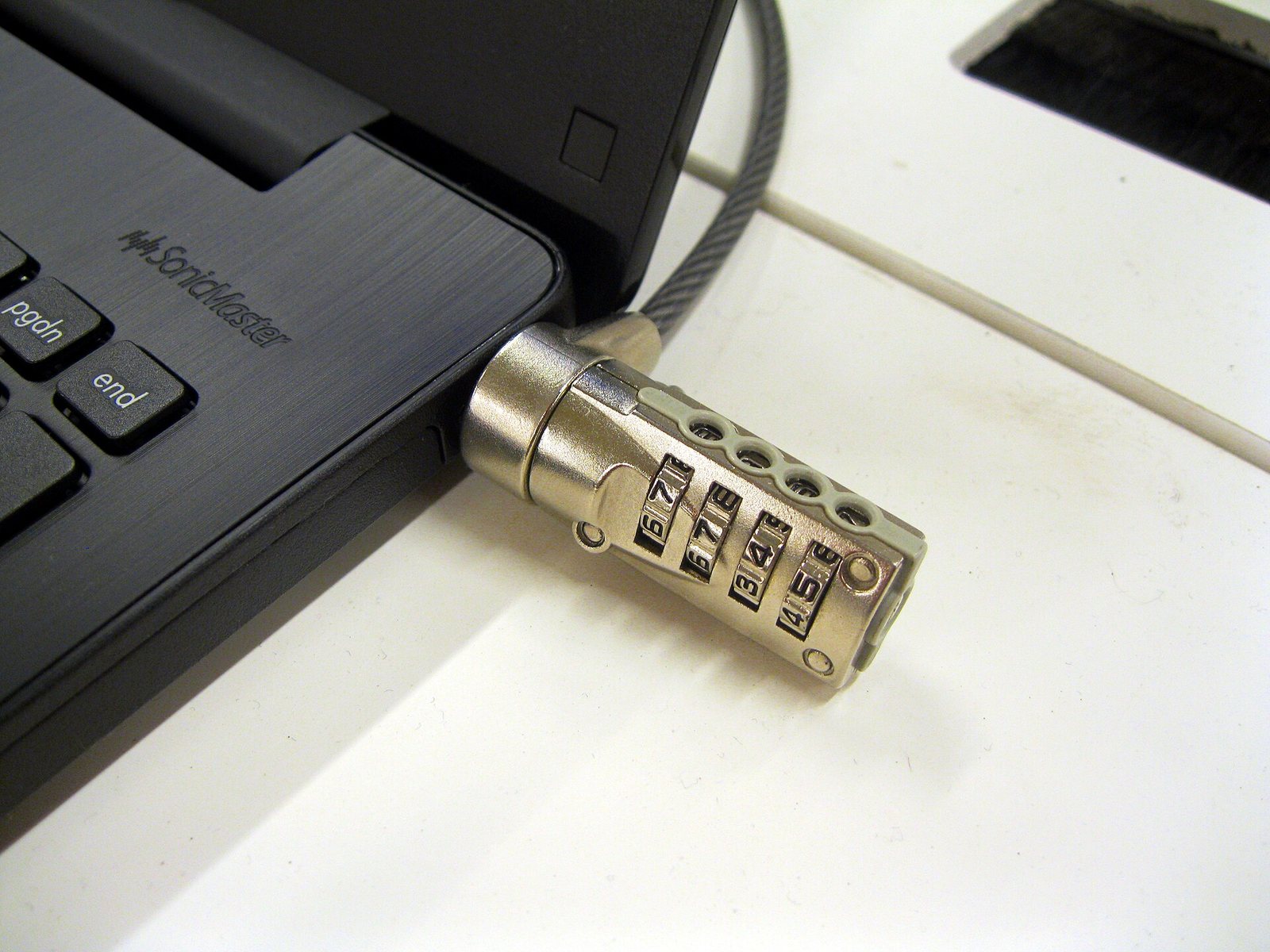
Photo: Laptop Kensington lock, Santeri Viinamäki — CC BY-SA 4.0
Source: habr.com


Comments
Sign in to leave a commentNo comments yet. Be the first.