Startup Recursive releases Flint, a coding model almost entirely designed by AI
Startup Recursive has released Flint, an open coding model whose architecture, training methods and code were almost entirely designed by another AI. Meanwhile, Demis Hassabis says artificial general intelligence could arrive within 2–3 years.
For you: AI now designs AI models. Learn to set clear tasks and manage coding agents, not just write code by hand.
Two big pieces of AI news landed almost at once. Startup Recursive introduced Flint, an open model for programming that was almost entirely designed by another neural network. And Google DeepMind co-founder Demis Hassabis said artificial general intelligence (AGI) is coming sooner than he expected.
Both stories lead to the same question: what changes for programmers and students when AI starts improving itself? Below we look at how Flint was built, the debate around it, and what you can do right now.
How AI built another model
To create Flint, Recursive used an automated system called Eureka Machine. According to CEO and co-founder Richard Socher, it proposed new training methods, neural network architectures and code optimized for specific chips. That let a small team build the model in a few months.
Socher was previously chief scientist at Salesforce. He hopes this approach will let small teams build competitive models and make cutting-edge AI more accessible.
What is inside Flint
The model uses a mixture-of-experts architecture. It contains several specialist parts, and only some of them switch on for each piece of text. That is why a large model can run fast and cheaply.
- 40 billion parameters in total, with about 2.5 billion active per token.
- Runs on a Mac with 48 GB of memory.
- According to Nvidia, it produces more than 220 tokens per second on an RTX Spark system with 64 GB of memory.
- Shows best-in-class results on the agentic coding benchmarks
SWE-Bench Pro v2andTerminal-Bench 2.1.
A Wired journalist ran Flint on a Mac and used it to build several programs, from a command-line to-do list to a tool for finding scientific papers. The model was fast and handled every coding request.
The self-improvement debate
Recursive self-improvement is the idea that AI does not just help build new models, but decides on its own which changes will make them better and checks the results itself. Researchers at Microsoft and several universities have studied this direction too.
Some experts fear such systems could slip out of control. In September, former Anthropic researcher Jacob Coxon said AI development, including self-improvement, could lead to human extinction within a few years. OpenAI chief scientist Jakub Pachocki also lists recursive self-improvement among potential risks. Bills to limit superintelligence development have been proposed in the US Congress.
Socher thinks these scenarios are overstated. He says Eureka Machine is built to keep humans in control: specialists can watch the process and stop it if something goes wrong. Still, the company's end goal is a system that can improve itself.
Recursive has raised $650 million at a $4.65 billion valuation. Its investors include Google Ventures, Greycroft, Nvidia and AMD Ventures.
When to expect AGI
Against this backdrop, Demis Hassabis has revised his forecast. He now believes AGI could arrive within the next 2–3 years, down from his earlier estimate of 5 to 8 years. In his view, today's systems still lack continuous learning and long-term planning.
«This is coming soon. I'm moving my timelines closer and closer», Hassabis told The Wall Street Journal.
What this means for readers in Kazakhstan
For developers and students in Kazakhstan, the signal is clear: AI tools are quickly becoming part of everyday work, and software is getting built faster. Knowing syntax is no longer enough. Setting tasks well, designing systems and checking what the model wrote matter more and more.
What to do now:
- Try agentic tools. An agent is a program that takes steps on its own, such as editing files and running tests. Hand it a simple, routine part of your work.
- Look at local models. Open models like Flint can run on your own computer. They need a lot of memory, so check your hardware first.
- Learn to write clear tasks. For example, you could give an agent this prompt:
Write a test for the [function name] function in this project. Run the test first; it should fail. Then fix the code so the test passes. Briefly explain each step.- Always check the output. Models write fast but make mistakes. Writing tests and reading code will be even more valuable skills.
- Invest in design skills. Thinking about system structure, data flow and security is work you cannot fully hand over to a model yet.
Sources
- Хайтек+ — Стартап Recursive выпустил Flint — модель для программирования, которую создал ИИ
- Хайтек+ — Демис Хассабис: до появления общего искусственного интеллекта осталось 2-3 года
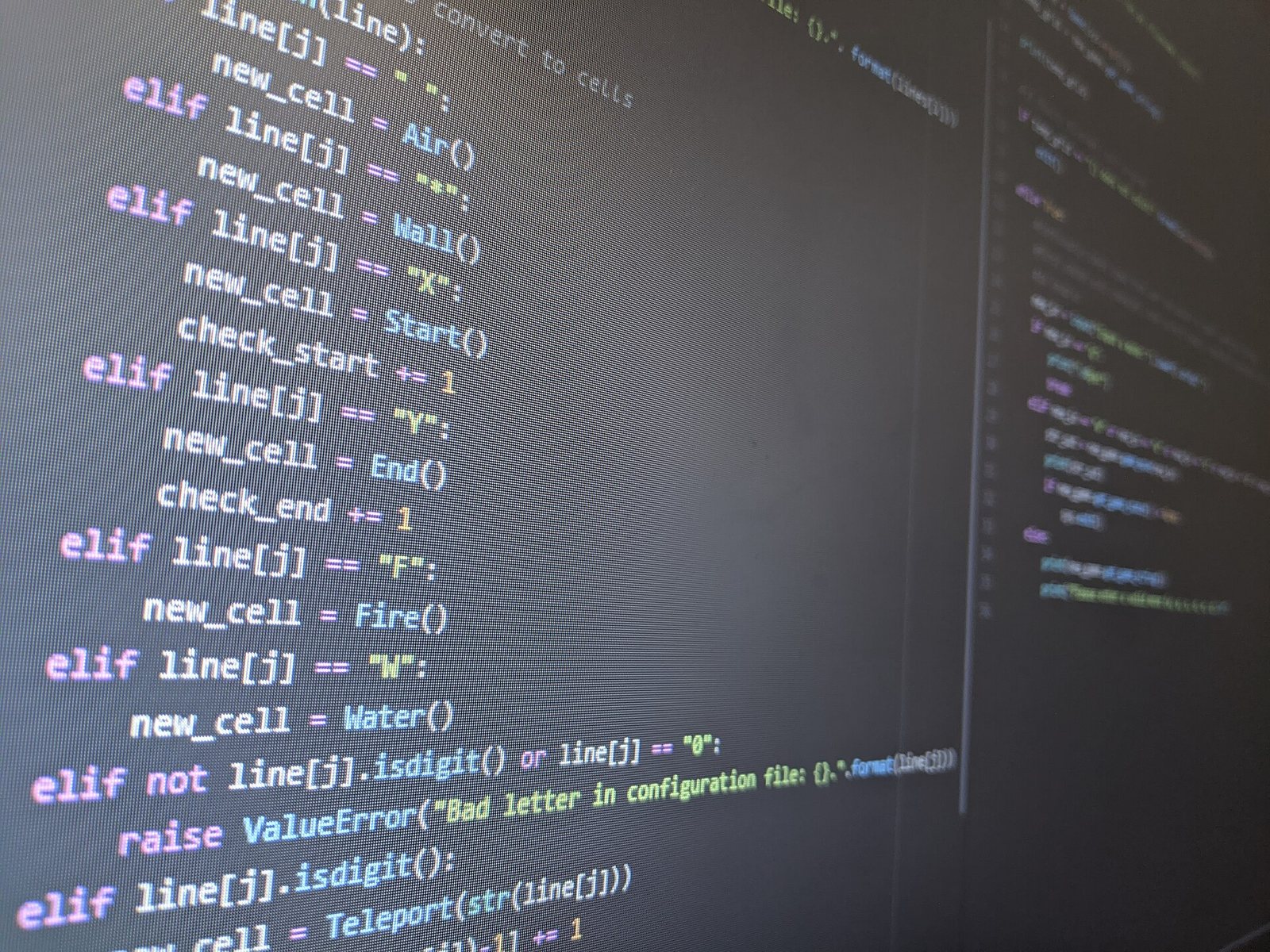
Photo: Skeleton programming code, Monky2020 — CC BY-SA 4.0
Source: hightech.plus



Comments
Sign in to leave a commentNo comments yet. Be the first.